You know that feeling? The renovation is complete, the floors are gleaming, the furniture has finally arrived, and every spotlight is in its place. Everything is perfect, yet upon crossing the threshold, you sense something slightly off. The space is orderly, clean, impeccable… but cold. It feels like a luxury hotel room: beautiful to look at, but lacking a story to tell.
The missing piece of the puzzle is almost always the same: empty walls.
Often the mistake is made of considering art as the last of accessories. When it comes to decorating a home, paintings and decorations are often seen as a “filler” to be chosen at the end, only if budget or time permits. In reality, we at Domidea Ristrutturazioni know that wall art is one of the most powerful design tools at your disposal. It is not an afterthought decoration, but the element that transforms a well-furnished room into a living home.
They Create a Magnetic Focal Point
Every well-designed space needs a focal point, an element that immediately captures the eye and provides visual order to the space.
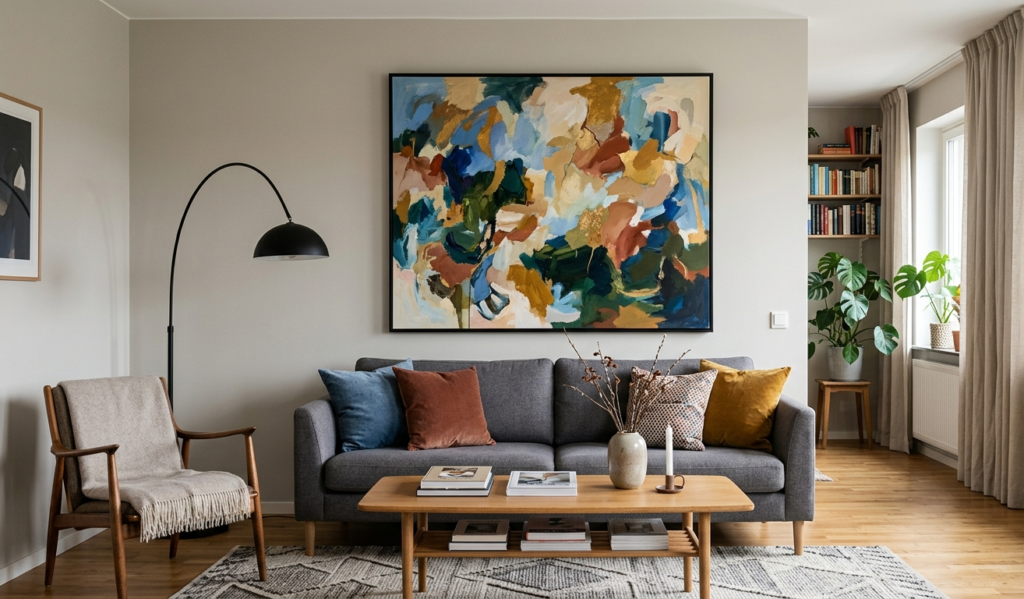
An original artwork above the sofa, refined canvas prints above the headboard, or a vibrant composition of modern paintings in the dining area can become the visual center of the room. Without this element, the eye doesn’t know where to rest and the room appears confused or too flat.
A well-chosen artwork manages to:
- Attract and guide attention
- Create visual balance
- Enhance the surrounding furnishings
They Correct the Room’s Proportions
Art is not just aesthetics, it is applied geometry. Just like wall color or furniture placement, paintings can “trick” the eye and improve the perception of volumes:
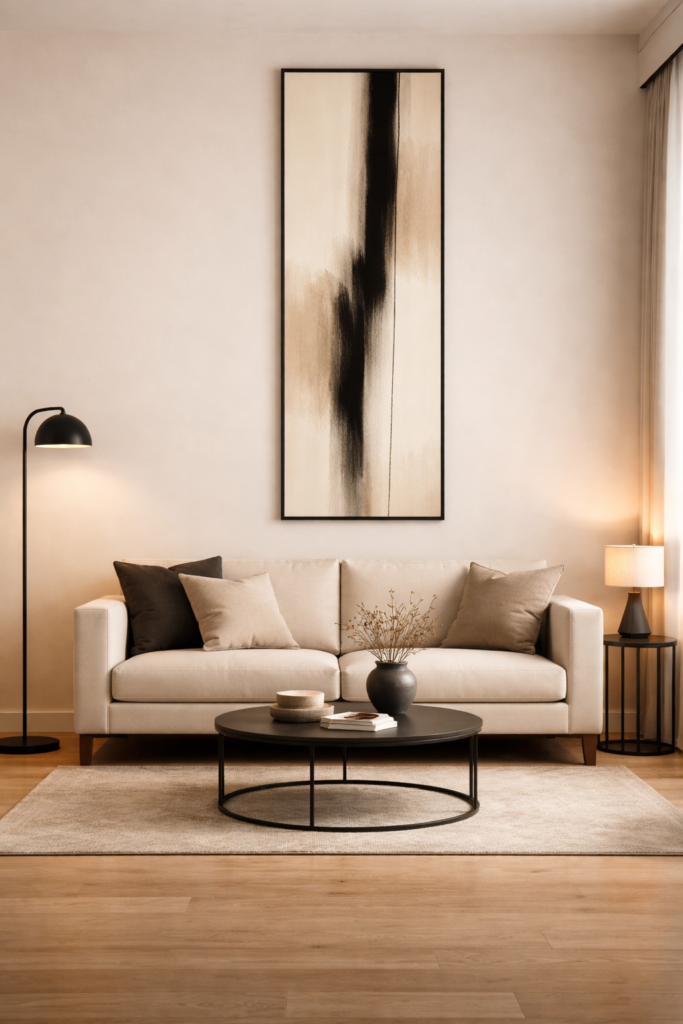
- Heighten ceilings: If ceilings are low, a vertically oriented work guides the eye upward, giving the room breathing space.
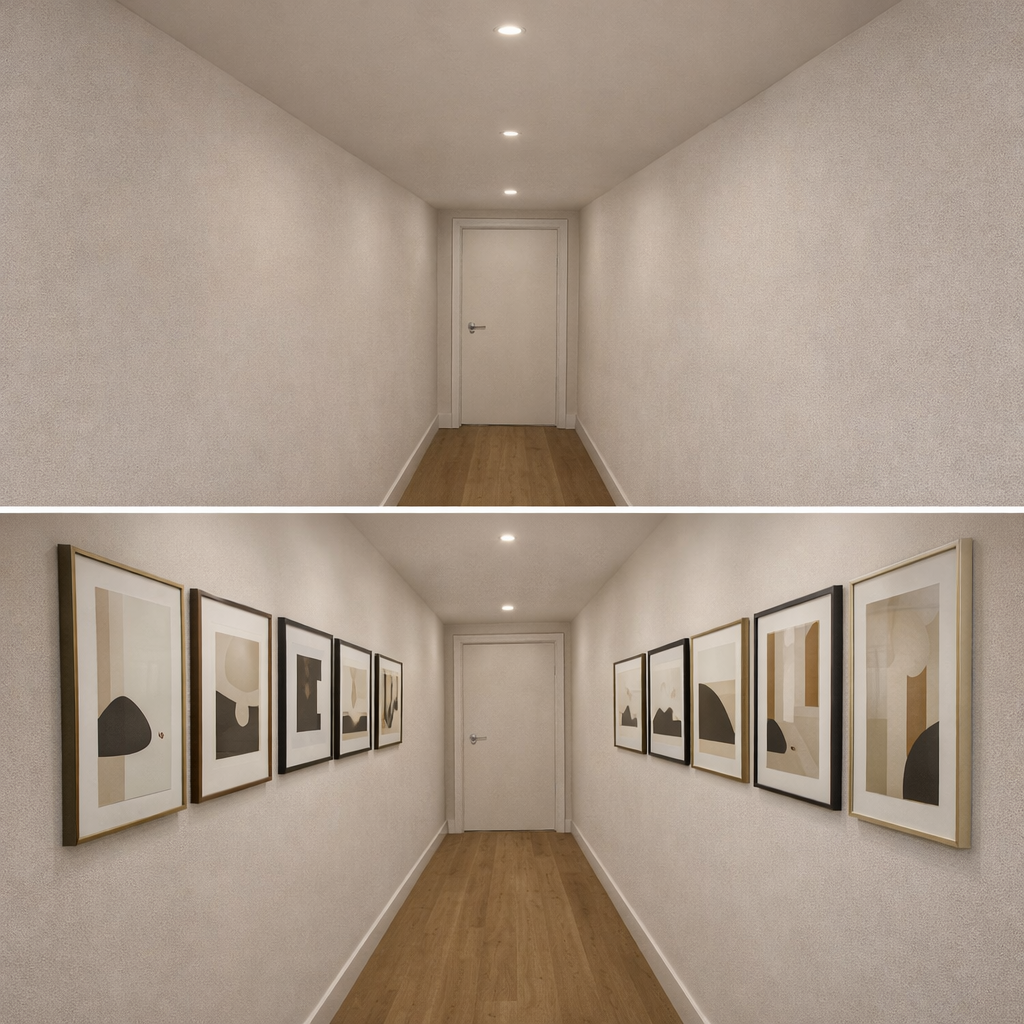
- Widen corridors: A gallery wall (a composition of multiple small paintings) arranged horizontally can make a narrow corridor seem less cramped.
- Rebalance large walls: A single large canvas fills dispersive voids without weighing down the environment with too much furniture.
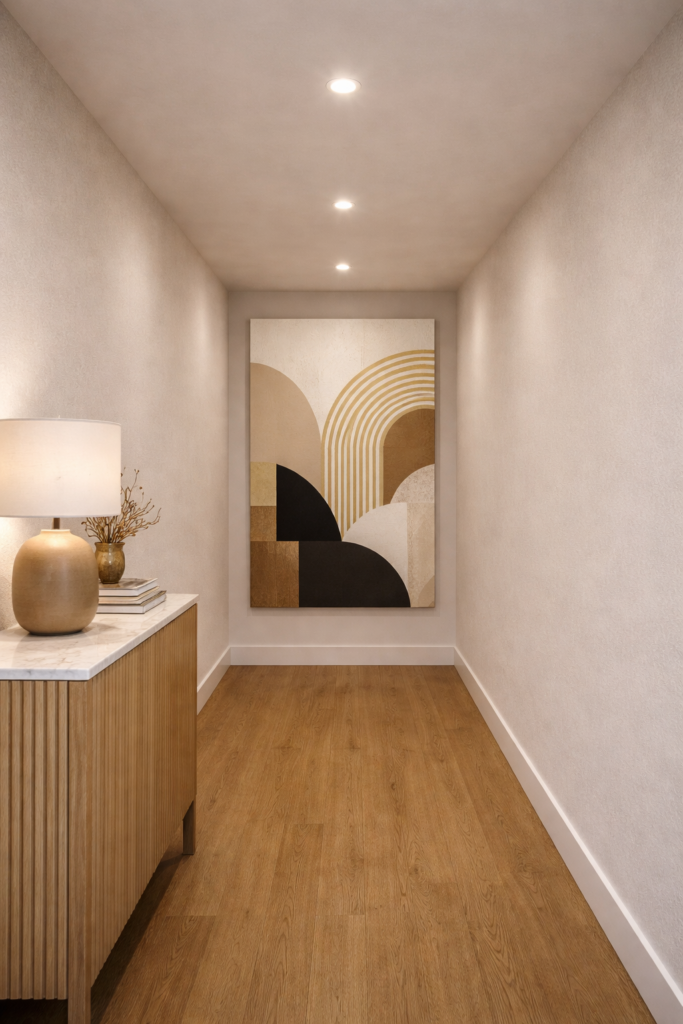
They Guide the Entire Color Palette of the Home
Many think that paintings should adapt to the colors of the home. In reality, the exact opposite often occurs.
During interior design, it can happen that we start precisely from a work loved by the client to build the entire color palette of the environment. This approach is fundamental for coherently selecting:
- The color of an accent wall
- The texture of fabrics
- The details of cushions
- The tones of rugs and accessories
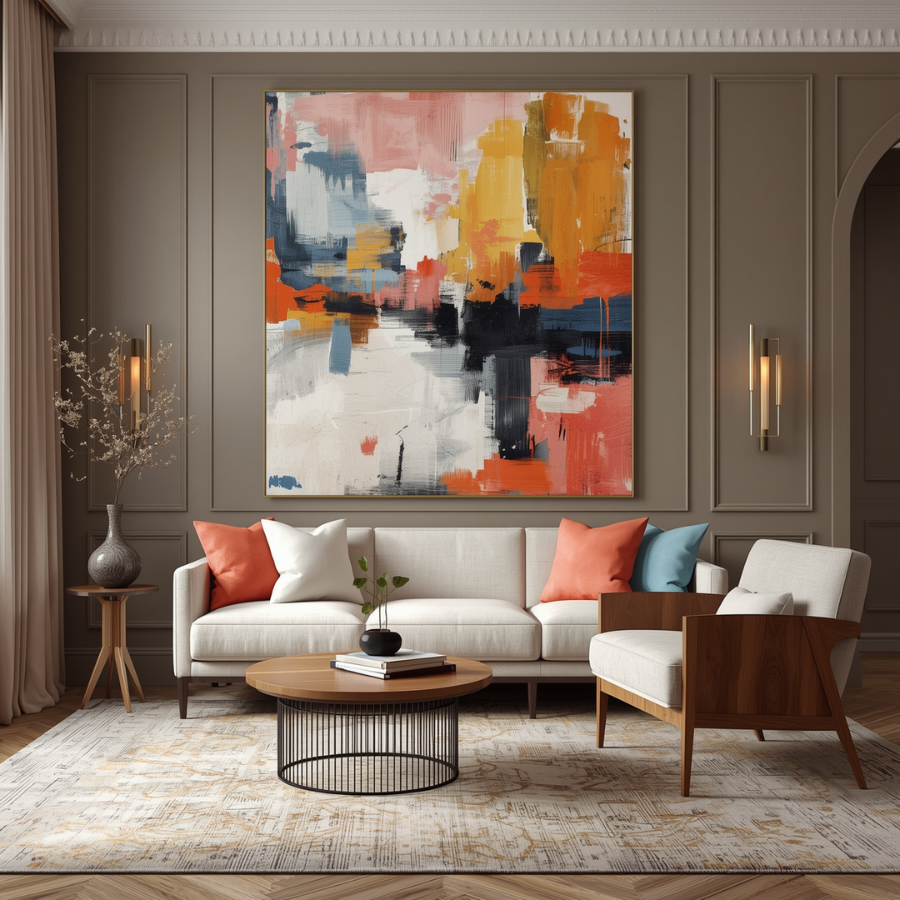
This creates natural harmony. When colors dialogue with each other, the space immediately appears more elegant and refined.
They Enhance Light Design
There is another essential element that is often underestimated: light. A painting without dedicated lighting loses much of its scenic impact.
For this reason, in the most refined interior design projects, a careful light design study is planned from the beginning specifically for artworks. The most effective and commonly used solutions are:
- Directional spotlights recessed in the false ceiling
- Adjustable track lighting for maximum flexibility
- Specific minimalist wall sconces for paintings

In the evening, soft light caressing the canvas can completely change the atmosphere of the room, making it more intimate and sophisticated. It is one of those details that truly make the difference between a simply furnished house and a designed home.
The Home Tells Who You Are
Ultimately, paintings do something that no sofa or table can truly do: they tell a story.
They can represent an unforgettable journey, a great passion, or a family history. They are the elements that make a home deeply and unmistakably yours. For this reason, when we design a renovation, we do not simply build walls or choose materials. We also think about how spaces can welcome and enhance what speaks of you.
Because a well-designed home is not just beautiful to look at. It is a home that tells your story.
Expert Advice: Watch the Height! The most common mistake? Hanging paintings too high. The “golden rule” of interior design suggests that the center of the work should be exactly at eye level, approximately between 145 and 150 cm from the floor. Only in this way does the painting truly relate to those who inhabit the space and to the proportions of the surrounding furniture.